Data Deficient Messages
In distributed applications and microservices that send events or notifications to other apps or services, take care to include sufficient information in the messages themselves. Failure to do so will likely result in …
MANY articles on a wide array of topics. You’ll find a lot of my newer content is going to my YouTube channel first, but I do still blog occasionally.
In distributed applications and microservices that send events or notifications to other apps or services, take care to include sufficient information in the messages themselves. Failure to do so will likely result in …
You can avoid a lot of problems by not putting you Entity Framework or Entity Framework Core DbContext instance in a using statement.

Little's Law describes the relationship between throughput, wait time, and work-in-progress. Understanding it can help with designing and optimizing systems and processes.

CAP Theorem generally applies to distribute databases. PACELC builds on CAP and describes system behavior when no network partition exists. Both of these can be applied in the context of microservices.

If you're going to be using GitHub actions a lot, it may be worthwhile to create reusable templates you can create from the dotnet command line interface.
Estimates are, unfortunately, sometimes necessary. Despite being wrong, frequently a waste of resources, having a short shelf life, and being non-transferable. Sometimes you just need them in order to make a plan.
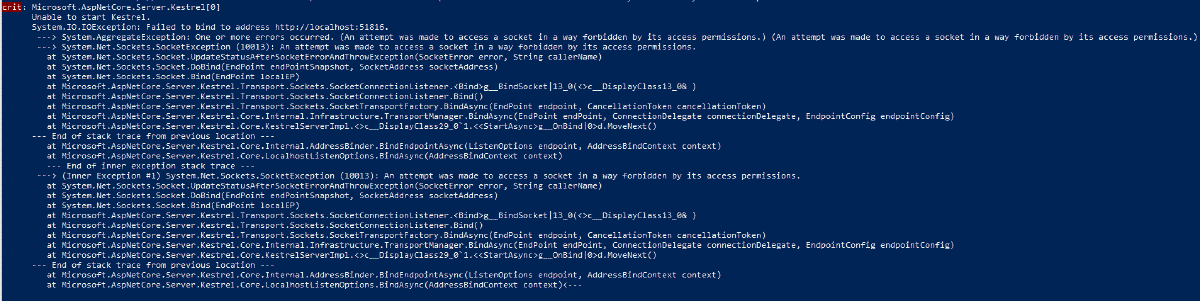
If you're seeing an error that says " An attempt was made to access a socket in a way forbidden by its access permissions." this may fix it.

Unknowns are inherently risky. Known risks you can plan for; unknown risks you need to learn more about so that you can mitigate them. Shifting risk left means taking actions that allow you to de-risk unknowns now, …
Estimates are perishable. As soon as they're made, new information makes them obsolete. Unless updated frequently, whatever value estimates provide quickly diminishes.
Estimates are at best educated guesses, and the further out in the future they are, the less likely they are to reflect reality. Ignore this fact at your peril.