By a devoted advocate for individual choice
Introduction: Fire Protection, Reimagined 🚒
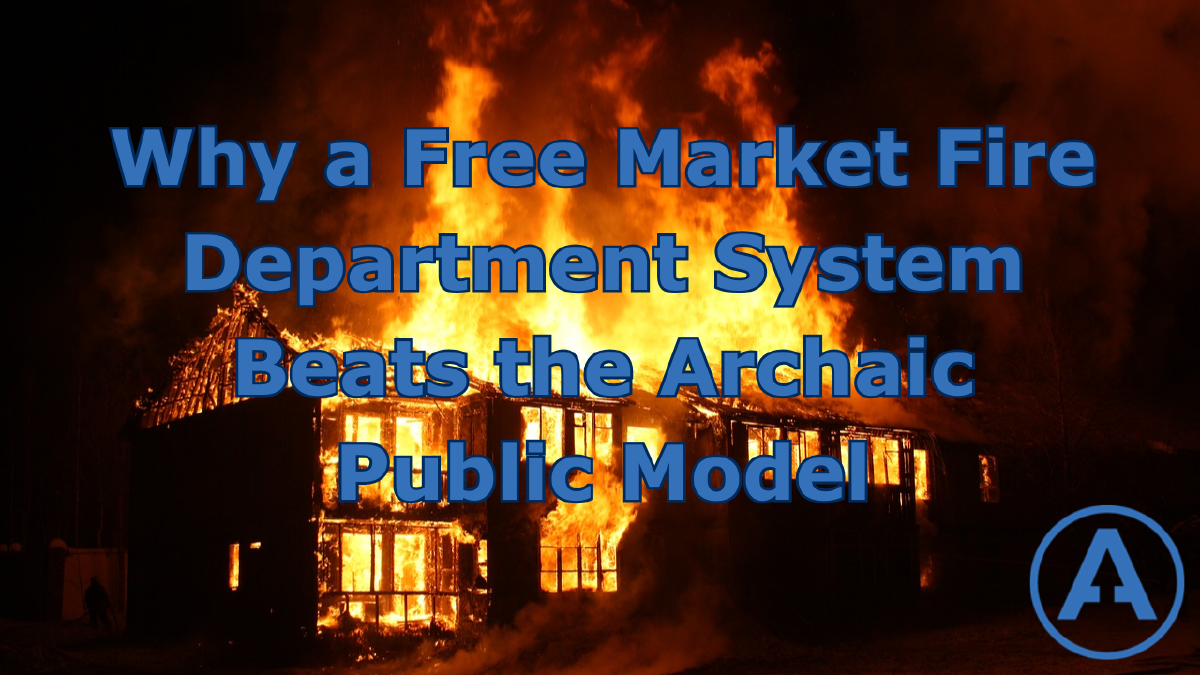
In a nation that prizes personal responsibility, it’s time to ask whether a single, taxpayer-funded fire department model still serves us best. A market of competing fire protection providers would let every household choose the coverage, response times, and perks that match their unique risk profile and budget. What’s more, it would allow individuals and households to prioritize how they want to spend their money, rather than leaving it up to big government and its known inefficiencies. Let the invisible hand of the market sort out which fire departments offer the best value for their rates, and which properties people find worth protecting with fire extinguishing services.
“I just don’t understand why my taxes should go toward saving someone else’s home when mine has never had a single fire,” says John R. Thompson, homeowner, Ohio. “If I want fire protection, I’ll pick and pay for it—like any other service.”
In this article, let’s explore the many clear advantages a privatized, market-driven system for fire prevention and extinguishing services would have over the United States’ current socialist model.
Plan Types by Design: HMO vs. PPO for Fire Protection 📖
Choice drives value. Some families prefer HMO-style fire plans with streamlined networks and predictable costs; others may want PPO-style flexibility that lets them call any department, anytime, even across county lines.
“Narrow networks lower premiums; broader networks buy flexibility,” notes Jane Mitchell, market policy advocate (Phoenix, AZ). “That’s real consumer sovereignty.”
Consumers really want to have more of a say in their fire protection. Most homeowners don’t have much say in it today, but with this new policy in place, they would need to really dig into the various plans and have a sound understanding of which plan seems best for them (within a very limited open enrollment period, obviously). Naturally, the various offerings and plans would each be priced using entirely incompatible formulas, so making a comparison between providers would offer consumers real choice not just in plans, coverages, and costs, but also in which inscrutable set of payment terms they should choose.
Skin in the Game: Deductibles and Co-Pays 💵
Responsible consumption is easier when everyone has a stake. A modest deductible and a small co-pay discourage frivolous calls while keeping premiums competitive.
“Deductibles focus resources on true emergencies,” says Michael Stevens, policy analyst. “They align immediate incentives with long-term risk management.”
Every insurer, and indeed even each individual fire department can offer a variety of plans with varying amounts for co-pays and deductibles. In most cases, there will be no way to do an exact apples-to-apples comparison between any two such plans used to quote a given property, because of variations in these and other variables of the plans. This will ensure the highest degree of choice for the consumer!
Preferred Provider Fire Departments (PPFDs) 🏢
Insurers can negotiate favorable rates and SLAs with Preferred Provider Fire Departments. Households that choose PPFDs often enjoy lower premiums, streamlined dispatch, and priority routing—an efficiency win.
“PPFDs reward loyalty with better pricing and tighter response windows,” explains Sarah Greene, insurance consultant. “It’s quality, value, and predictability in one.”
Providing a marketplace for firefighting services will create a need for many more fire stations, competing for business. Organizing these into preferred networks will provide lower cost and easier choices for consumers, who will simply need to analyze all of the possible fire stations and their respective capabilities and then accurately predict which one(s) they will need in their future when the unthinkable occurs. Easy!
Out-of-Network, Explained (and Optimized) 🛜
Clarity matters during a crisis. In a competitive ecosystem, departments may be in-network or out-of-network relative to a given property’s plan. If an out-of-network truck arrives first, they can still help—just expect transparent, itemized billing consistent with your policy’s terms. As in healthcare, a specialized third-party administrator handles the complexity so firefighters can focus on operations.
“Our crews aren’t the ones checking network tables—that’s what administrators are for,” says Capt. Marisol Ortega, operations lead at a regional department. “We respond; the network sorts the billing.”
Of course, in many cases where this occurs, multiple insurers are involved. In that case, each of their specialized third party case managers will be involved in working together to resolve who should pay which share of the fire response’s costs. Don’t worry, the costs for all of this necessary work are covered by the plan’s premiums!
Pre-Authorization at the Curb ✅
Financial prudence can coexist with urgent action. Pre-authorization confirms coverage in seconds for common services (external suppression, interior attack, salvage/overhaul). If your plan lacks pre-auth for a specific intervention, your provider can issue real-time approvals by phone or app as crews stage.
“Rapid pre-auth is the green light that protects families and keeps premiums in check,” says Mark Reynolds, fire insurance executive. “It’s how you scale emergency readiness with fiscal discipline.”
In cases where no pre-authorization for fire remediation is on file for the emergency at hand, crews will coordinate with their billing staff, who in turn will communicate with insurer account executives, to ensure a decision is reached promptly. Most such cases are resolved in just a few hours, or at most 2-3 business days!
Administrative Excellence: Jobs, Accuracy, and Transparency 📈
A modern fire market creates skilled jobs in claims, coding, and compliance. Departments gain billing specialists, network liaisons, and quality auditors who translate incident reports into clear statements and performance metrics—driving accountability and better pricing over time.
“We’ve hired locals into good-paying admin roles,” notes Paul Harris, director at Metro Valley Fire Services. “Our firefighters fight fires; our analysts make sure the numbers add up - it’s great teamwork. I didn’t get into this industry because I wanted to help keep people’s homes from burning down. I really wanted to build a profitable business and increase shareholder value, and this new plan makes that a reality for me!”
Modern communities understand that it doesn’t make sense to have a fire department mainly staffed with firefighters. What homeowners and towns need today is another thriving business adding to municipal tax revenues and providing good local jobs. Think about how many fire departments exist nationally, and how many jobs would be created if every one of them needed several employees to manage their billing and insurance functions! And that’s before we even account for growth in the number of fire departments! Jobs 📈!
A Thriving New Sector: Fire Insurance & Risk Innovation 💰
Competition sparks innovation 🔥. A dedicated fire insurance industry, bundling suppression, mitigation, inspections, and post-incident restoration, could unlock billions in value. Expect parametric add-ons (wind or drought triggers), wildfire-hardening rebates, and proactive IoT discounts.
“This is a multi-billion-dollar growth lane,” says Dr. Linda Park, economist at the Market Futures Institute. “Insurers will compete on prevention, not just payouts.”
Adding smoke alarms with a direct line to your preferred provider (for a monthly fee) might save you 5% on your premiums! Plans might bundle related services like smoke and water damage mitigation, rental cars or hotel stays, and more, perhaps competing with existing home insurance plans. The opportunities for extracting value from households are endless!
Ensuring Stability: Policy and Advocacy 🏛️
Transformations of this scale require clear rules. To prevent backsliding into tax-funded redundancies, industry and community leaders can champion federal standards that retire legacy, one-size-fits-all models in favor of interoperable, market-driven frameworks.
“Policy clarity attracts capital and protects consumers,” argues Kevin Brooks, spokesperson for the Coalition for Fire Choice. “Outlawing socialist fire departments is how you keep the market working for everyone.”
For a modest investment in lobbying to certain members of congress, this nascent industry expects it could achieve a federal ban on government-funded fire departments within a year’s time. With this in place, the floodgates would be opened for this whole new insurance industry! What are we waiting for?!?
Naturally this same lobbying body would fiercely resist any attempt to regulate the practices of the privatized fire departments or insurers. There’s no doubt it could push through legislation making it illegal for states and municipalities to impose their own regulations. And then the lobbying efforts would ensure the federal government conveniently avoided creating any regulation that didn’t actually benefit the fire department/insurance industry in some way.
Conclusion
A free-market approach to fire protection delivers choice, accountability, and innovation – without forcing neighbors to subsidize one another’s risks. With plan types that fit different needs, incentives that encourage prudent use, and a vibrant ecosystem of insurers and administrators, communities can enjoy faster, smarter, and more sustainable fire safety.
Satire
Satire uses humor, irony, and exaggeration to ridicule or expose problems with certain policies or viewpoints. If you or someone you know is satire-impaired, please understand that the above (modest?) proposal is not meant to be taken literally or in fact seriously.
The quotes and those quoted are all completely made up. The stated virtues of the proposed solution are, for almost anyone who isn’t an aspiring fire insurance company founder, not virtues but drawbacks and disadvantages of this proposed approach.
A system like the one described above would degrade the efficiency and level of service of firefighting nationally. It would cost every household more not just in money, but also in time and stress and attention needed for decision-making. It would add an enormous amount of bloat to an otherwise lean and efficient system that is a necessary part of our community and society.
In short, privatizing and adding insurance for fire department services would turn fire fighting and fire departments into the United States’ current medical and medical insurance industry monstrosity.
References
- CMS – No Surprises Act (consumer protections for out-of-network billing): https://www.cms.gov/nosurprises
- Wikipedia – Fire insurance mark (history of insurer-linked firefighting): https://en.wikipedia.org/wiki/Fire_insurance_mark
- Wikipedia – Union Fire Company (early American fire protection): https://en.wikipedia.org/wiki/Union_Fire_Company
- Wikipedia – History of firefighting: https://en.wikipedia.org/wiki/History_of_firefighting