MVC Controllers are Dinosaurs - Embrace API Endpoints
A simpler approach to building API endpoints with ASP.NET Core.
MANY articles on a wide array of topics. You’ll find a lot of my newer content is going to my YouTube channel first, but I do still blog occasionally.
A simpler approach to building API endpoints with ASP.NET Core.


There is some debate about whether the movie Die Hard (1988) should be categorized as a Christmas movie. On the one side are those who point to its central Christmas theme, music, and messaging, all of which add to and …

In distributed applications and microservices that send events or notifications to other apps or services, take care to include sufficient information in the messages themselves. Failure to do so will likely result in …

You can avoid a lot of problems by not putting you Entity Framework or Entity Framework Core DbContext instance in a using statement.

Little's Law describes the relationship between throughput, wait time, and work-in-progress. Understanding it can help with designing and optimizing systems and processes.
CAP Theorem generally applies to distribute databases. PACELC builds on CAP and describes system behavior when no network partition exists. Both of these can be applied in the context of microservices.

If you're going to be using GitHub actions a lot, it may be worthwhile to create reusable templates you can create from the dotnet command line interface.
Estimates are, unfortunately, sometimes necessary. Despite being wrong, frequently a waste of resources, having a short shelf life, and being non-transferable. Sometimes you just need them in order to make a plan.
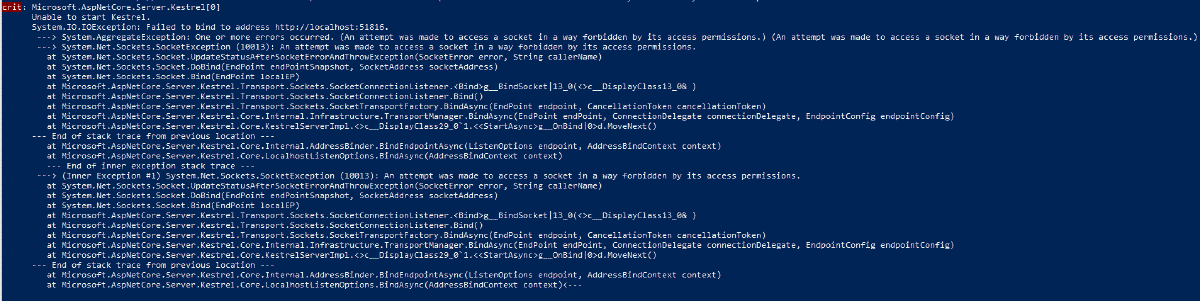
If you're seeing an error that says " An attempt was made to access a socket in a way forbidden by its access permissions." this may fix it.